


Fieldwork at Xeitl Sit' (LeConte Glacier) in Alaska.
Studies of icy and snowy landscapes are inextricably linked with learning about our climate system – past, present and future. Ice cores taken from glaciers can give us information about what climate was like in the distant past. Present-day melting rates of glaciers can help us forecast sea-level rise and other hazards. Changes in snowfall can have serious ecological impacts on rivers and streams and consequences for drinking water. Our scientists study all of these aspects of the icy parts of our planet, and more.
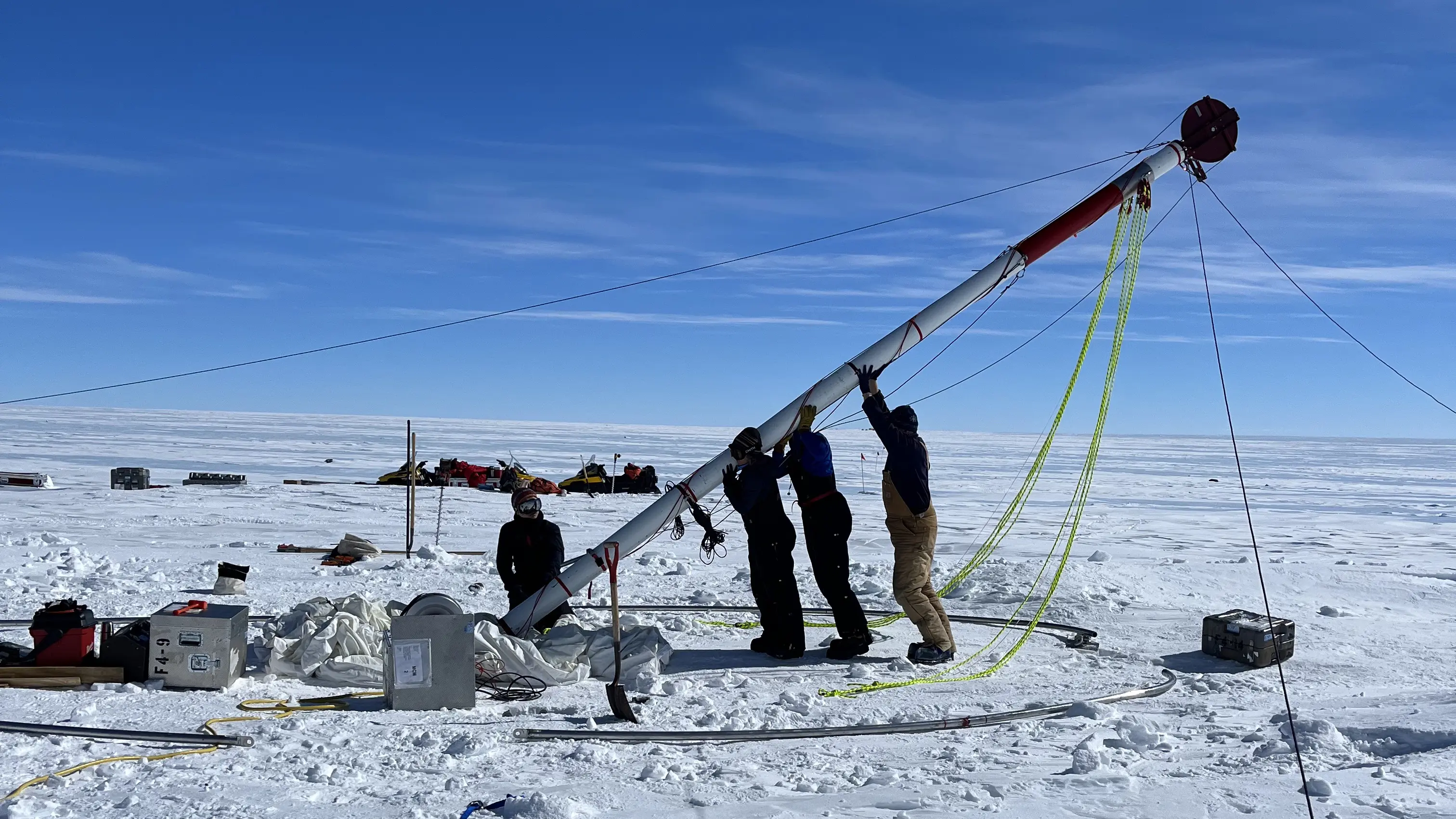
Past climate
This research area focuses on determining climate drivers in the distant past in order to understand what might happen in the future. Some of these researchers use ice cores containing layers of ancient ice to search for answers about the Earth’s past, and others use tools like mathematical modeling and stable isotope analysis.
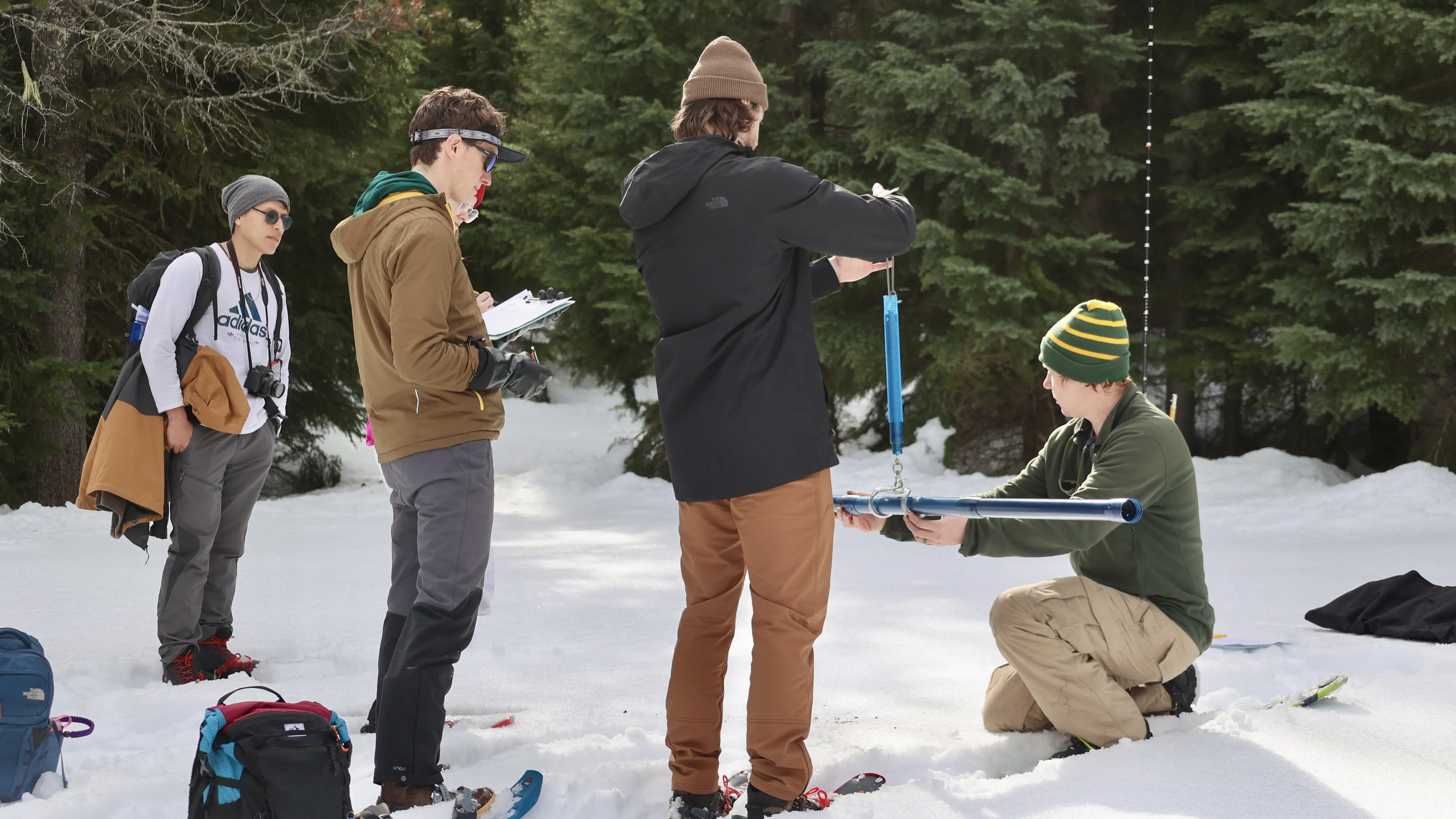
Snow
Ice and snow both affect and are affected by modern-day climate change. Researchers in this area examine ice and snow dynamics across spatial and temporal scales, incorporate these dynamics into climate and weather models, and look at impact of snowmelt on agriculture and other societal water needs.

Glaciers
Glaciers at both poles contain clues to past climates and have immense effects on our climate today. Faculty in this research area examine glacial structure and melt dynamics, and tie their observations to the global climate system.
"Our ability to understand the past gives us a greater understanding of ice sheet-climate interactions and provides context for what we might experience in the future."
Faces of cryosphere research
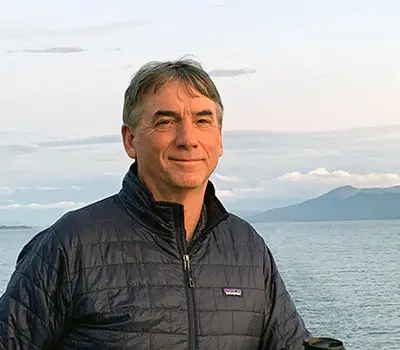
Jenny Hutchings
Oceanographer
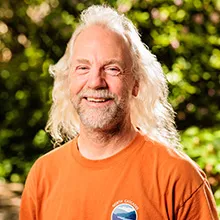
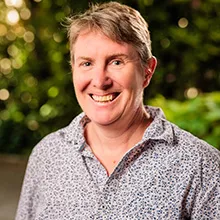
Jonathan Nash
Oceanographer
Want to learn more about the cryosphere?
Explore our degree programs.
Earth sciences, elevated
Our scientists and students are on the leading edge of discovery, from the depths of the ocean to remote mountain peaks, and from the state-of-the-art labs to the communities with which we partner.
Where in The World...
At CEOAS, the planet is our lab and our classroom. Come explore a sample of the places we roam.
.text-primary
.text-success
.text-danger
.text-warning
.text-info
.text-dark
.text-muted
OSU Card H2 Heading
H3 Heading Here
This card does not have an image or URL with link text. Just body text. Regular old text here.
- bullet 1
- bullet 2
- bullet 2
Columns
Bootstrap 2 Column Layout
And more body content can go here!
The size of the box adjusts to the amount of content.
We can put pretty much anything within this box.
Hero Block Text
You can Move this block to the left column if you want a left aligned hero, or the right column for a right aligned hero. You should replace this next with something of your own.


