

Profile Page
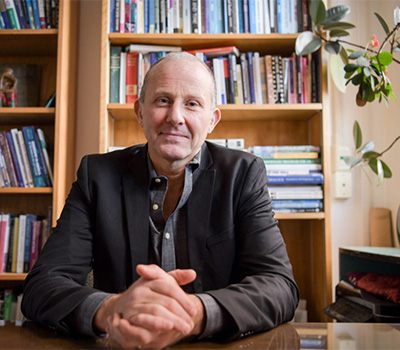
Demian Hommel
Wilkinson Hall 222
2601 SW Orchard Avenue
Corvallis, OR 97331
United States
CEOAS Unit
Primary: Geography and Environmental Sciences
Secondary: Oceanography
Contact Information
- Email: hommeld@oregonstate.edu
- Office: Wilkinson Hall 104
- Address: 2601 SW Orchard Avenue, Corvallis, OR 97331
Potential Graduate Students: Please Read:
I’m not accepting applications at this time.
Education
- Ph.D., Geography (2009), University of Oregon
- M.A., Geography (2004), University of Oregon
- B.S., Environmental Studies (1999), University of Oregon
Biography & Professional Vision
We are currently navigating a profound friction between the rapid expansion of automated intelligence and the slower, more deliberate pace of human inquiry, while trying to prepare students for a dynamic and chaotic world. As an Associate Professor of Teaching, my work is driven by a fundamental concern: how do we ensure that the rise of generative AI enhances, rather than replaces, the critical agency of our students? This challenge is central to human-environment geography, a field dedicated to understanding how societies adapt to systemic disruption.
My current research and leadership—as the 2025–2026 AI in Teaching and Learning Fellow and a member of the 2026 Humanities Critical AI Literacy Fellowship cohort—focus on moving beyond reactive, ban-centered policies toward what might be termed an “Intentional AI" framework. I am committed to co-constructing pedagogy that prioritizes evidence-based practice and a deep sense of student belonging. At Oregon State University, I work to ensure that our world-class infrastructure, such as the Huang Collaborative Innovation Complex, serves as a laboratory for ethical inquiry rather than just technical efficiency.
This commitment to authentic engagement extends beyond my own classroom. Whether facilitating two-day intensive workshops on student engagement for Earth Science faculty at Montana State University or advocating for critical, apatial AI literacy through platforms like EdSurge and Faculty Focus, my goal is to foster a community of practice that values the struggle of learning. By centering equity and transparency , I aim to transform the existential challenge of AI into a shared opportunity for institutional growth and student transformation.
Meanwhile, I am an advocate for authentic, informed teaching, ensuring that students in high-enrollment and core education courses develop the critical skills necessary to navigate global risks and environmental, political, and economic changes. My goal is to transform institutional "AI anxiety" into a proactive, resilient pedagogy that prepares the next generation for a dynamic world.
Interests
- Primary Focus: AI in higher education; human dimensions of global change; risk, vulnerability, and resilience; Scholarship of Teaching and Learning (SoTL).
- Secondary Interests: Environmental security; political ecology; Southeast Asia and the Pacific; people-reef interfaces; experiential and blended learning.
Selected Publications
- Hommel, D. (February, 2026). "Beyond Bans: Rebuilding Teaching for a World With AI." Faculty Focus.
- Hommel, D. (November, 2025). "What If Geography Is the Curriculum We Need for the Future?" EdSurge.
- Hommel, D. (August, 2025). "AI in the Classroom: Panic, Possibility, and the Pedagogy in Between." Faculty Focus.
- Hommel, D. (January, 2025). "There is no Plan(et) B: Human-Environment Interaction in the Anthropocene." Top Hat Publishing.
- Hommel, D. and Cohen, B. (October, 2023). "Reducing AI Anxiety Starts by Talking with Students." Faculty Focus.
- Hommel, D. and Joe Rohrlich (June, 2022) “ Why Student Success Depends On Continuous Feedback.” Harvard Business Review.
- Hommel, D. (May, 2022) “Aspiring to Create Learning Experiences Students Remember.” Faculty Focus.
- Hommel, D. (2016) “The Human Planet: Human Geography in the Anthropocene.” Top Hat Publishing.
Fellowships & Recognition
- Critical AI Literacy Fellowship (2026–2027), Oregon State University. Center for the Humanities.
- AI in Teaching and Learning Fellowship (2025–2026).Oregon State University. Center for Teaching & Learning
- Center for Teaching and Learning Mini-Grant for AI Innovation (2025).
- Visiting Fellow in Assessment, AP Human Geography, College Board (2025).
- CEOAS & CTL Teaching & learning Fellowship (2022-2025)
- Most Innovative Educator Award, Top Hat (2020).
Current Courses
- GEOG 103: The Human Planet
- GEOG 203: There is no Plan(et) B: Human-Environment Geography in the Anthropocene
- ENVS 204: AI & The Environment (In Progress)
- GEOG 295: Geographic Field Experience
- GEOG 331: Population, Consumption, and Environment
- GEOG 350: Risk, Vulnerability, and Resilience